
Unveiling interests: the first Bank of Brazil and its shareholders, (1808-1821)
DOI:
https://doi.org/10.29182/hehe.v28i3.1116Keywords:
Public Debt, Public Credit, Sinking FundAbstract
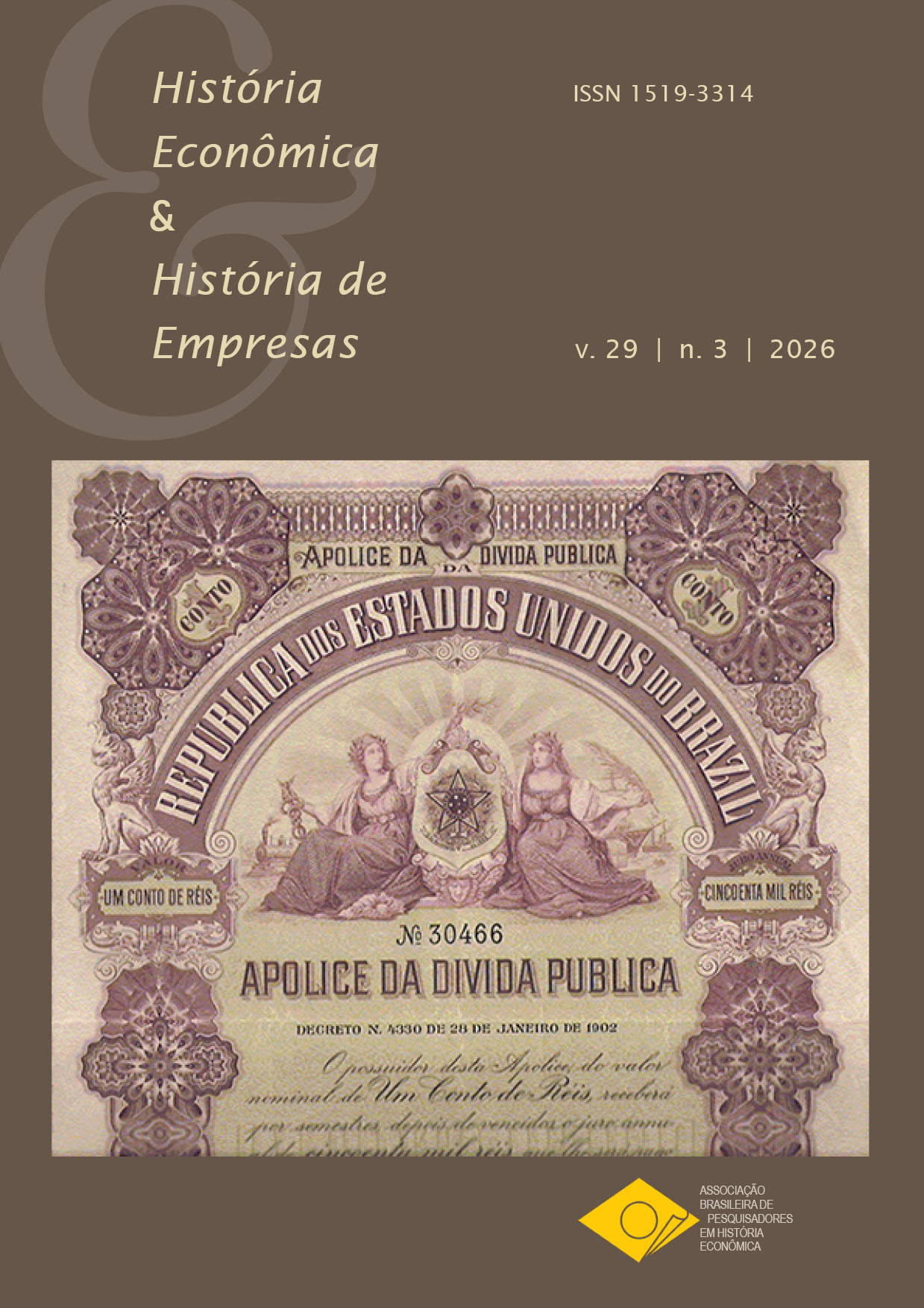
The text examines the Memoria sobre o credito em geral, operações de credito, caixas de amortização, e suas funções... (1832), by Francisco Cordeiro da Silva Torres, general inspector of the Sinking Fund, produced a few years after the enactment of the law creating the Brazilian public debt (1827). The treatise seeks to legitimize the new model of public debt management and the Sinking Fund by comparing it with the historical experiences of England and France. Silva Torres conceives of public credit as an extension of the moral reputation of governments, similar to the individual behavior of agents. Based on a reading of contemporary works on public credit, especially the work Théorie du Crédit Public (1816), by Albert Hennet, Silva Torres' argument highlights the reliability of the English system, based on specific funds and institutional guarantees, in contrast with the unstable practices of the French government during the Old Regime and in the post-revolutionary period. The writing helps to understand the circulation and appropriation of ideas about public finances in Brazil, but it also served as an instrument of persuasion for local elites regarding the solidity of the nascent public debt system.
Downloads
Downloads
Published
How to Cite
Issue
Section
License
Copyright (c) 2026 Bruno Aidar

This work is licensed under a Creative Commons Attribution 4.0 International License.
Authors retain copyright over their work, granting the journal only the right to its first publication. In addition, they are authorized to enter into separate additional contracts for the version of the work published in this journal, provided that the initial publication in this journal is acknowledged.